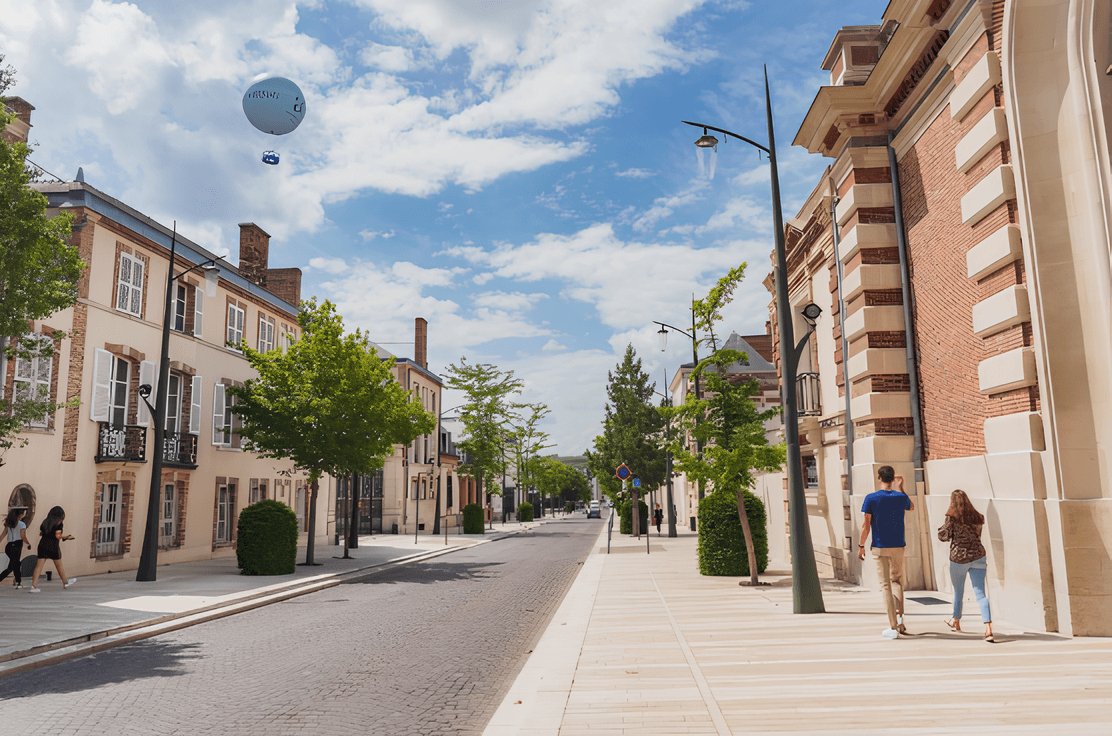
A Century of the Avenue de Champagne
Stepping into History.
On February 27, 1925, the City of Épernay paid tribute to its terroir by renaming the Rue du Commerce as the “Avenue de Champagne.” This seemingly simple act marked the beginning of official recognition for a street that, over time, has become the beating heart of the Champagne region.
Nicknamed the “Champs-Élysées of Champagne,” the avenue today embodies excellence and elegance, drawing thousands of visitors each year who are captivated by the charm of its historic mansions and the prestige of its renowned Houses.
Its history, rich and spanning several centuries, stretches far beyond this prestigious name. Originally known as the “Chemin de l’Hôpital,” then “Rue de la Folie” in the 16th century, it was long a hub of bustling activity and commerce. By the 18th century, its strategic role became clear as it formed part of the royal route connecting Paris to Germany. Renamed “Rue du Commerce” during the Revolution, it quickly became the nerve center of Champagne’s trade. The 1925 renaming was a natural culmination of this journey, cementing its essential role in the growth and worldwide fame of Champagne.
The avenue’s architectural landscape with its Renaissance and Classical styles, its grand townhouses, and iconic monuments like Château Perrier (now the Champagne Wine Museum) strongly contributes to its tourist appeal. The 2015 UNESCO World Heritage listing of the Coteaux, Maisons et Caves de Champagne further boosted its reputation. The city has invested in developments to make the area more welcoming, while the Houses have expanded wine tourism activities. As a result, Épernay welcomed 2.8 million visitors in 2024. Beneath its cobblestones, over 110 kilometers of chalk cellars shelter nearly 200 million bottles living testimony to a heritage unique in the world.
At the heart of this prestigious avenue, Maison Boizel established at 46 Avenue de Champagne for over forty years gracefully carries on this heritage. Its building, composed of two symmetrical pavilions and a large semi-underground brick cellar, blends harmoniously with the architectural landscape. The cellars, enhanced by architect Giovanni Pace, hold the living memory of the House, where bottles age patiently, and notably the Caveau du Trésor, home to the legendary 1834 vintage.
Visiting Champagne Boizel offers a journey through time and the Champagne savoir-faire, perfectly reflecting the spirit of the avenue that welcomes it.